Underfloor heating: which to choose
The question comes up the same way for everyone: you get the keys, walk into the bathroom, and remember that tile is cold. Then you go looking for answers and land in a debate between installers. Let's break it down.
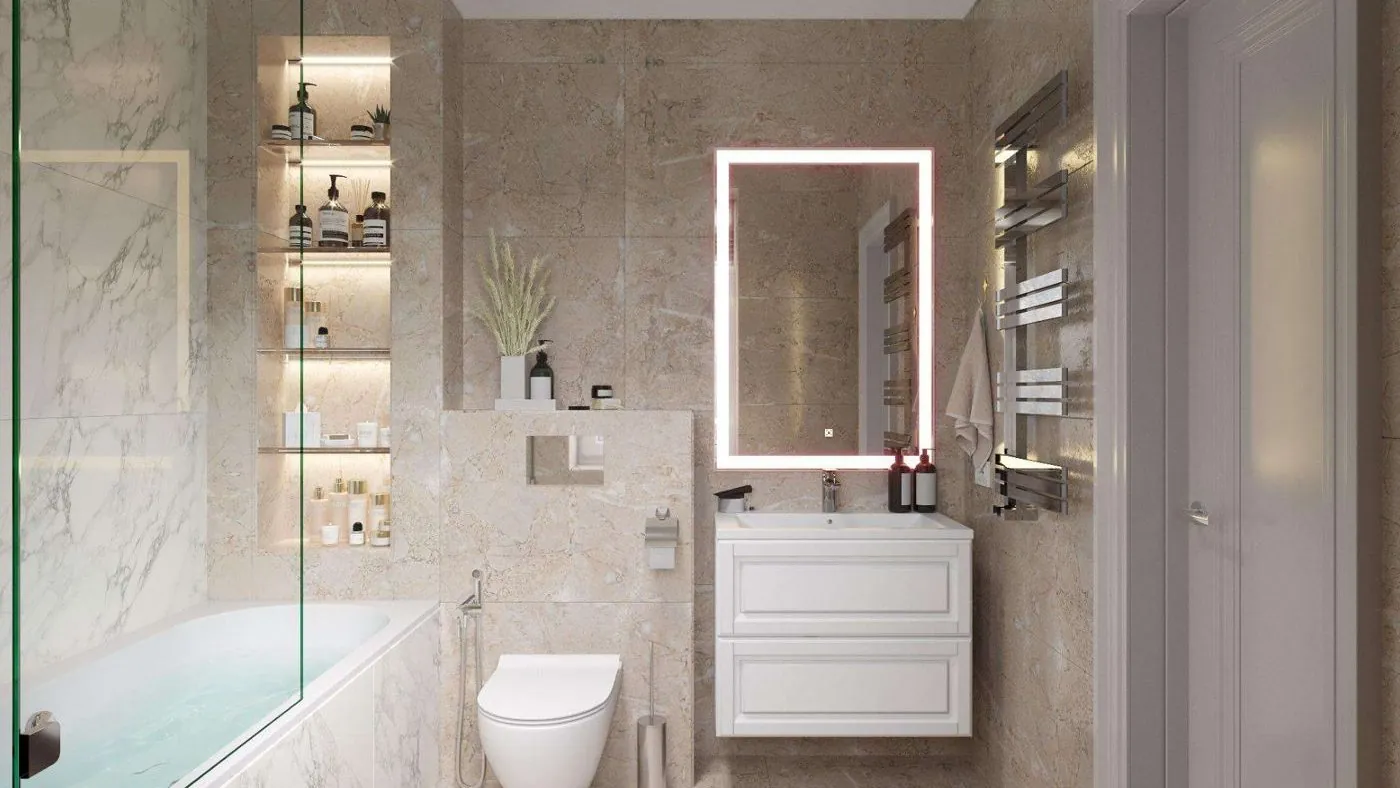
Two types, and the choice between them isn't a matter of taste
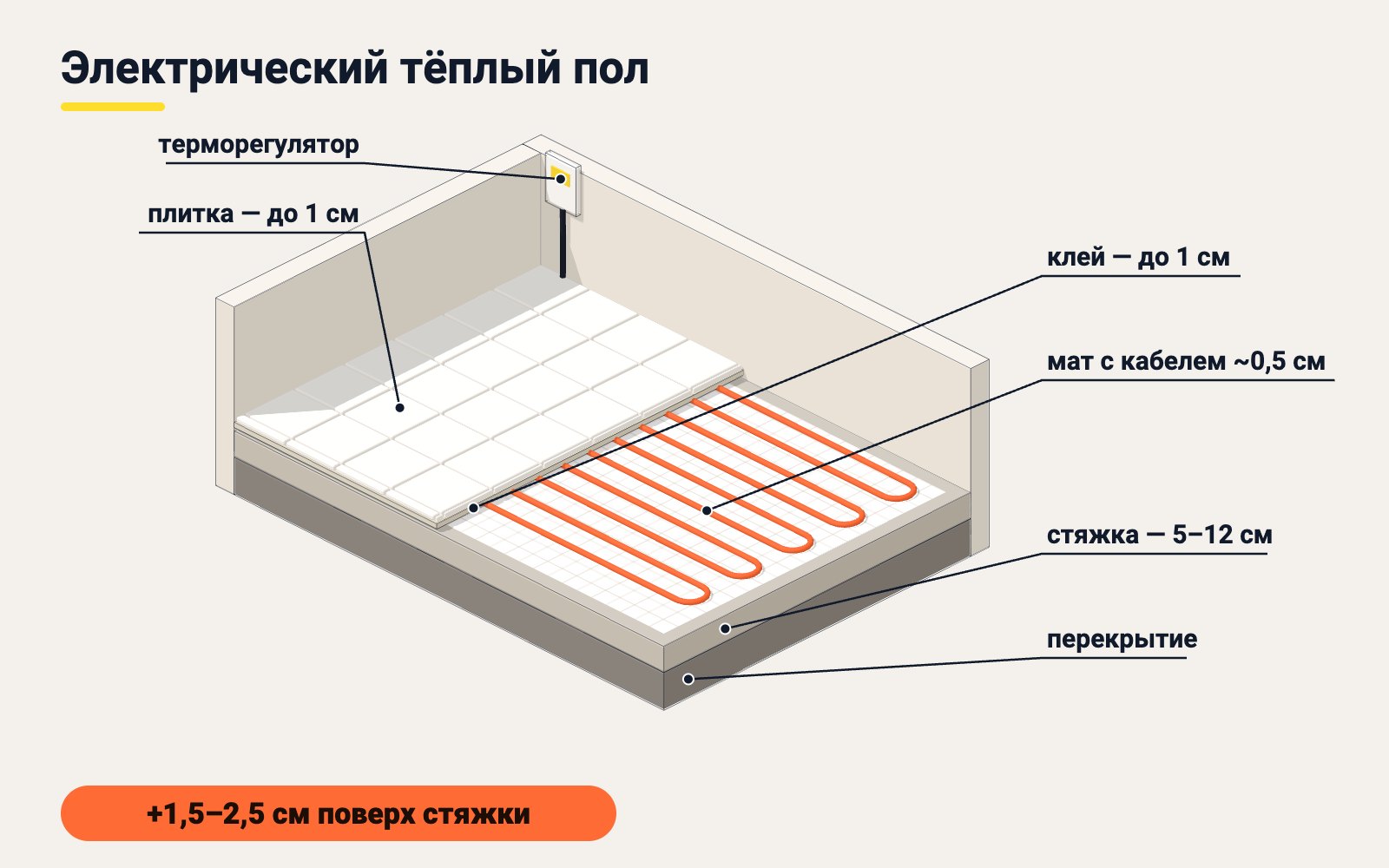
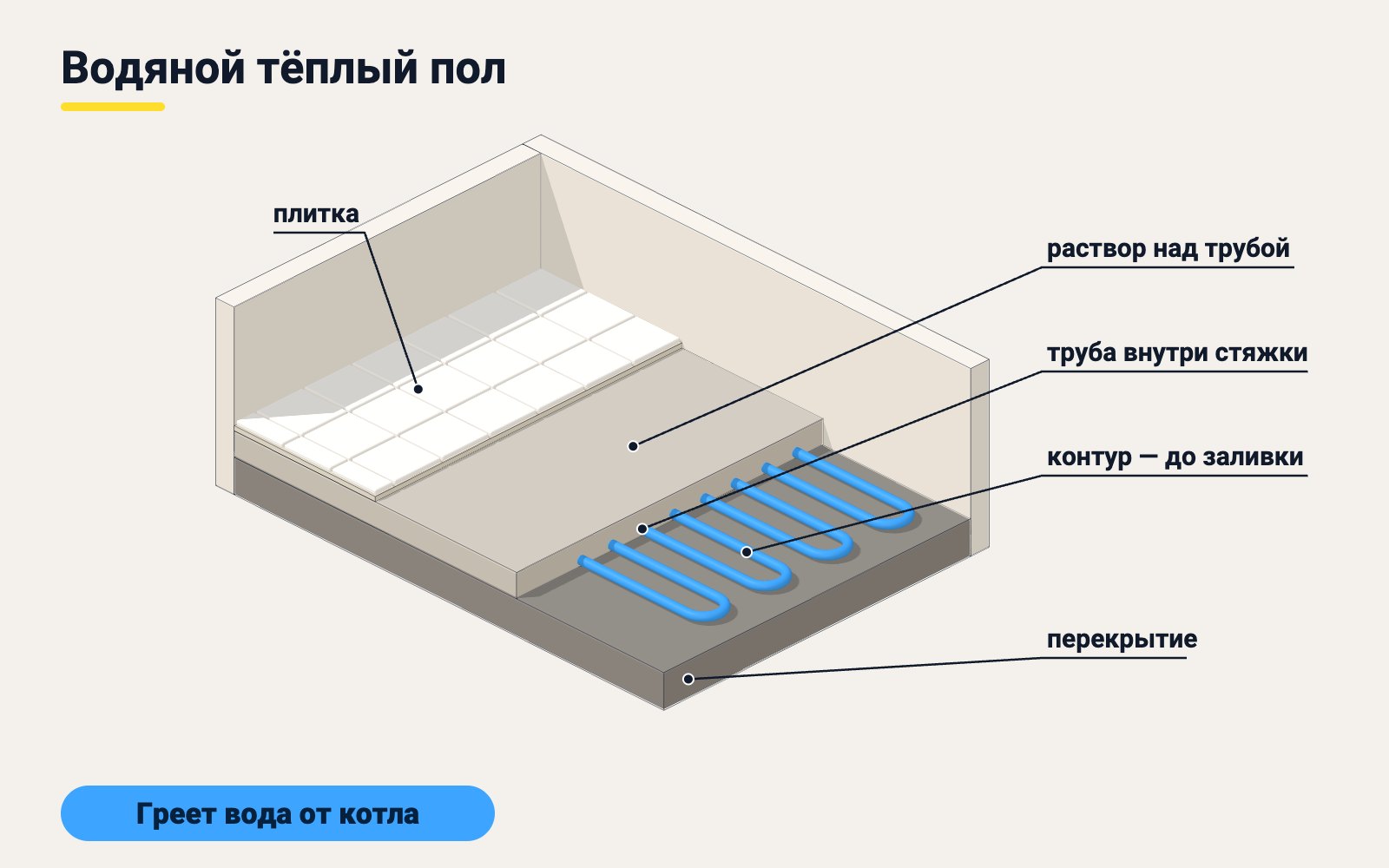
Electric. Heating mat or cable under the floor covering. Cheaper to install, heats quickly, can be turned on for an hour. Runs on electricity, and in cold months it shows in the bill. Laid over finished screed and takes almost no height.
Hydronic. Circuit with heat carrier from the boiler. More expensive to install: requires manifold, pressure testing, layer of mortar over the pipe. But heating from a gas boiler costs several times less than electric. Inertial — takes long to heat up and long to cool down.
Each has pros and cons, but in most cases circumstances have already made the choice for you.
Let's be clear: this is in addition to radiators
Underfloor heating almost always works together with radiators, not instead of them. It's turned on during cold months and not kept running around the clock. This matters because alarming calculations online are usually made as if the floor heats all year at full power.
In an apartment you can't do hydronic
The limitation isn't technical, it's legal.
Hydronic circuit connects to the heating or hot water system. In an apartment building this is common property, and tapping into it is a reconstruction requiring a project and written approval from the management company and heat supplier.
Restrictions on installing such flooring depend on local regulations. The possibility of work must be confirmed with the housing inspection and management company.
Exception — apartments with individual boiler. There the issue is resolved.
So in an apartment the choice falls on electric. And the real question isn't "which" but in which rooms to install it.
Where it's needed in an apartment
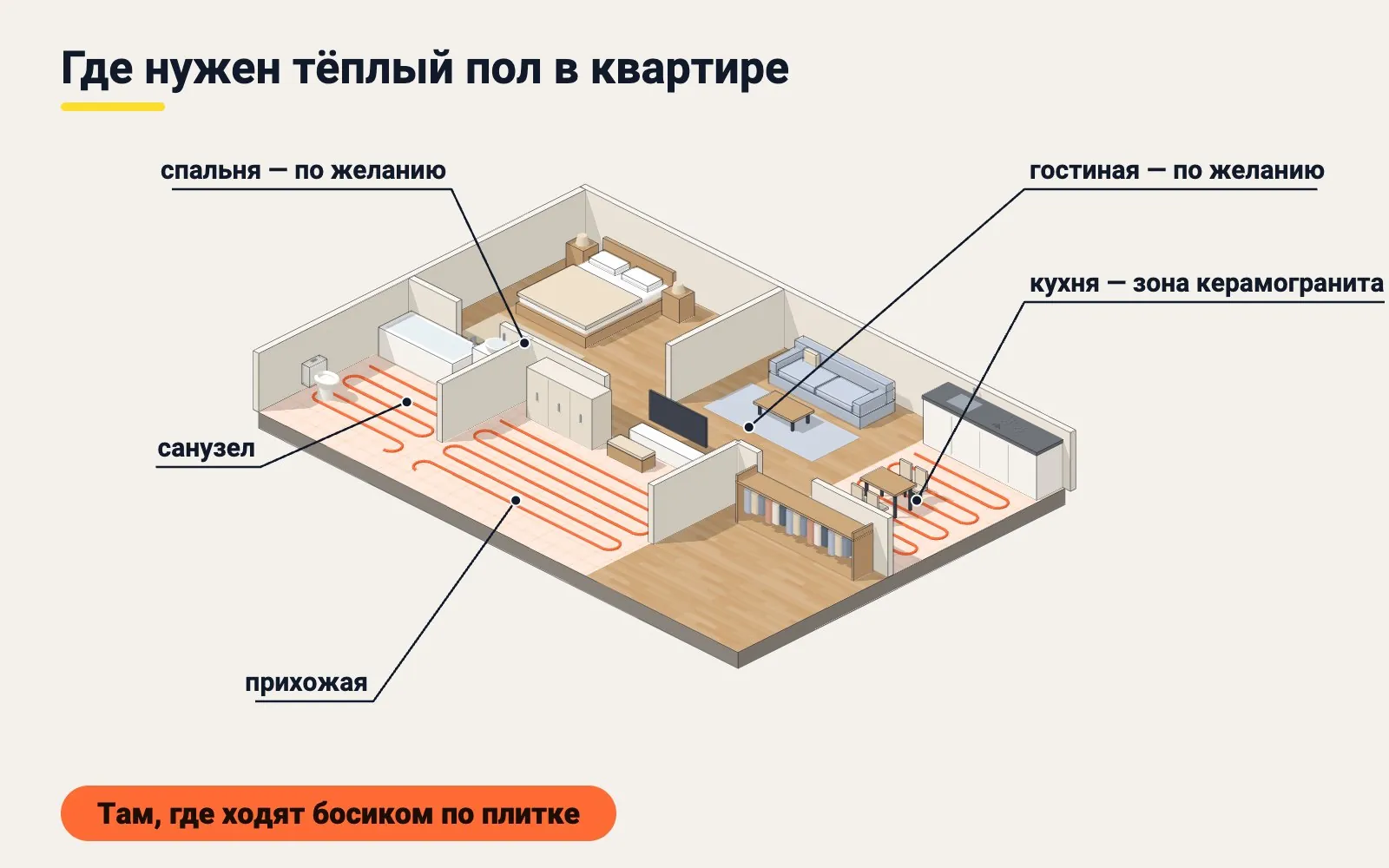
Where you walk barefoot on hard flooring:
- Bathroom. The most obvious place and most common.
- Entryway. You come in from outside in wet shoes, floor is cold and takes long to dry.
- Kitchen — in the porcelain tile zone. Specifically in the zone, not the entire area: under cabinets and appliances it's not needed.
In bedroom and living room with soft flooring it's needed much less often, and most often consciously skipped.
Not just floor: heated wall
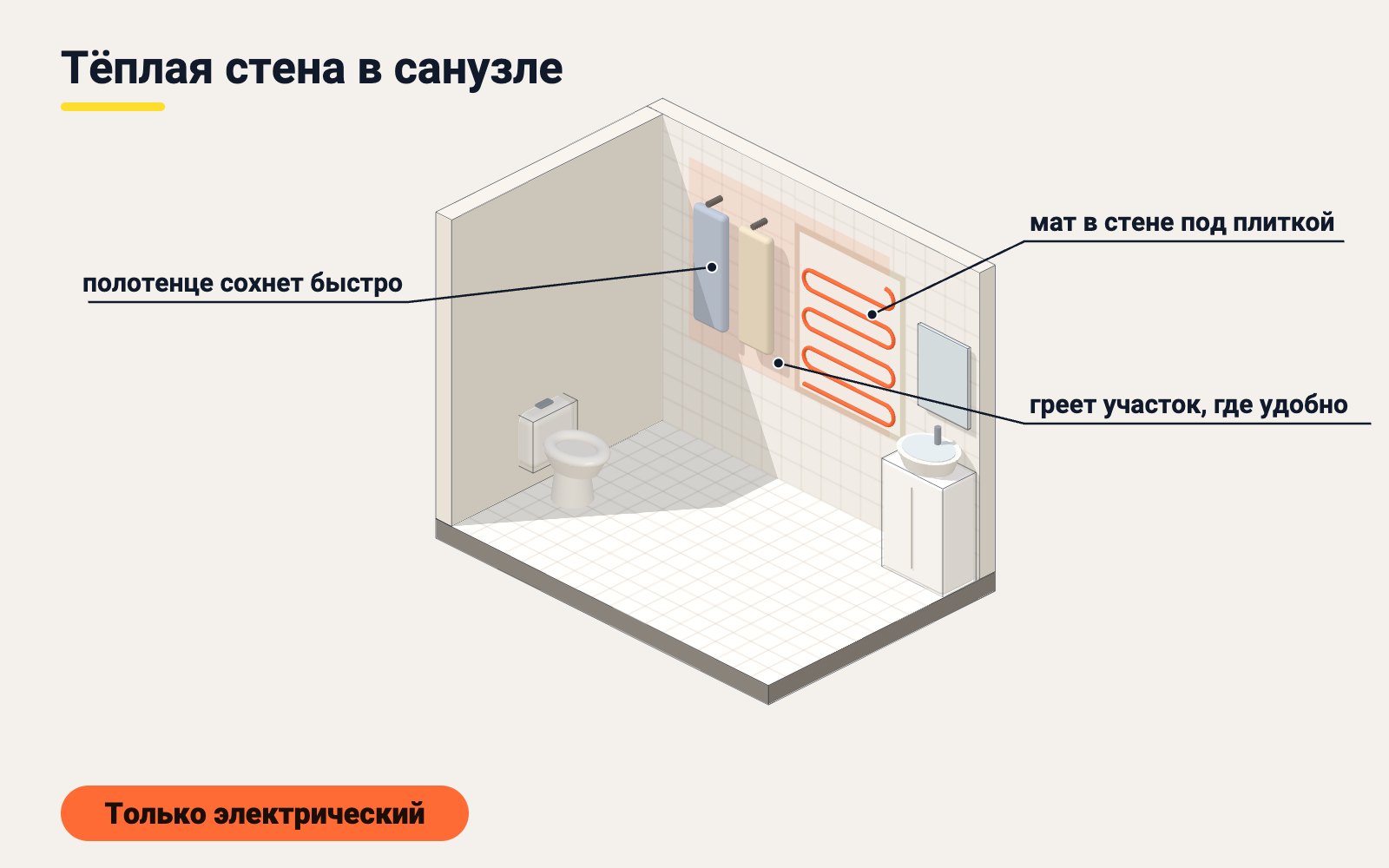
Few know about this, but the technique works. Electric mat is laid not only in floors but also in walls — most often in bathrooms, in the section where towels hang.
Wall heats up, towel dries quickly and doesn't turn into a damp rag by evening. Essentially it's a towel warmer, just without a fixture on the wall and without being tied to a riser: the heated section can be placed wherever convenient, not where the pipe runs.
Hydronic systems aren't used this way — not applied in walls.
Which flooring works and which doesn't
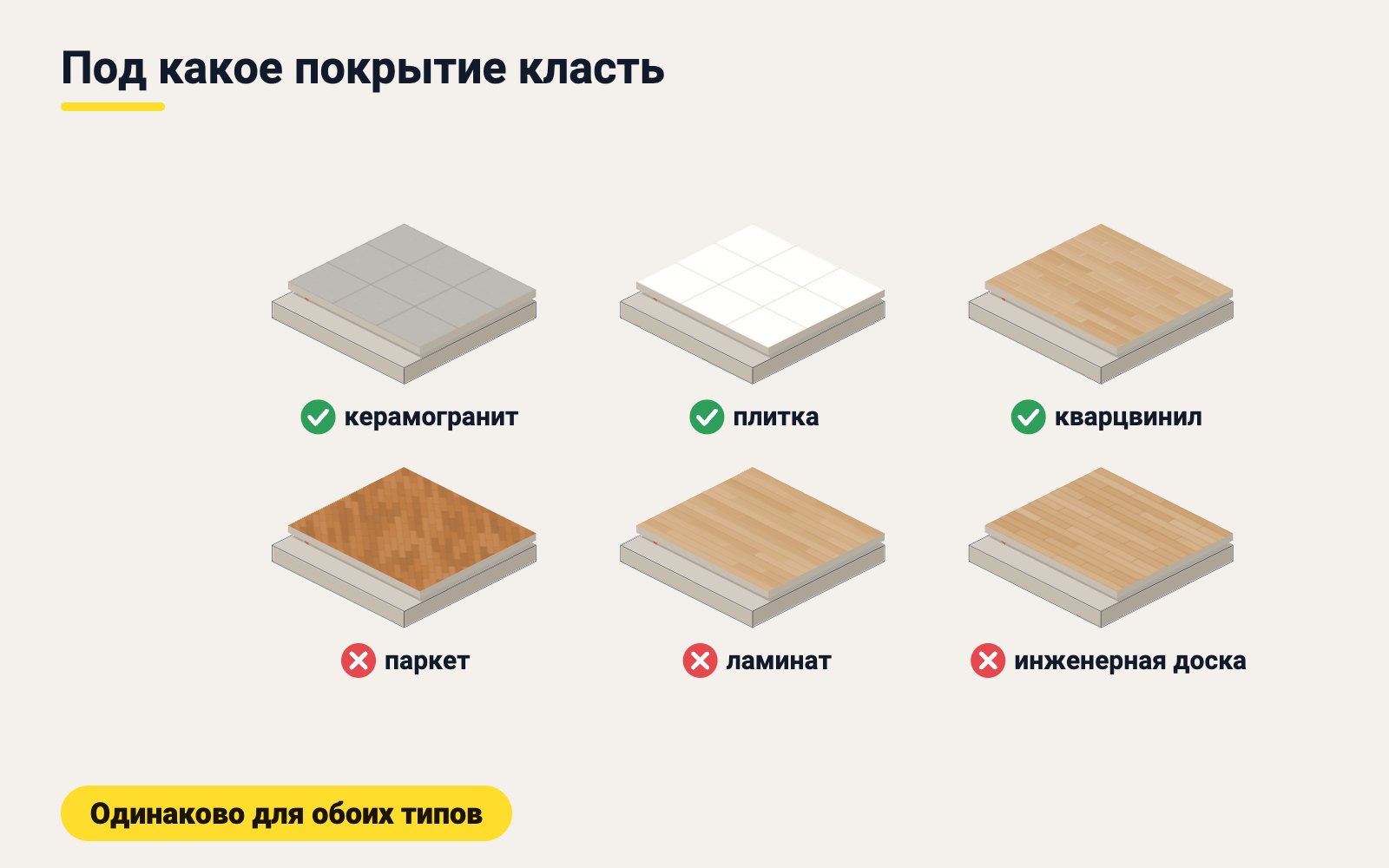
This is the part people forget until they buy flooring, then have to redo.
Not recommended to install underfloor heating under natural wood and similar materials: engineered wood, parquet, laminate. Wood reacts to constant heating — dries out, warps, gaps appear. Flooring that cost a lot starts looking cheap after a couple seasons.
Works well with porcelain tile, ceramic tile, and luxury vinyl. These materials handle heat easily and conduct it well — meaning you get what you paid for.
Flooring limitations are the same for both types: electric and hydronic.
House: where hydronic becomes primary
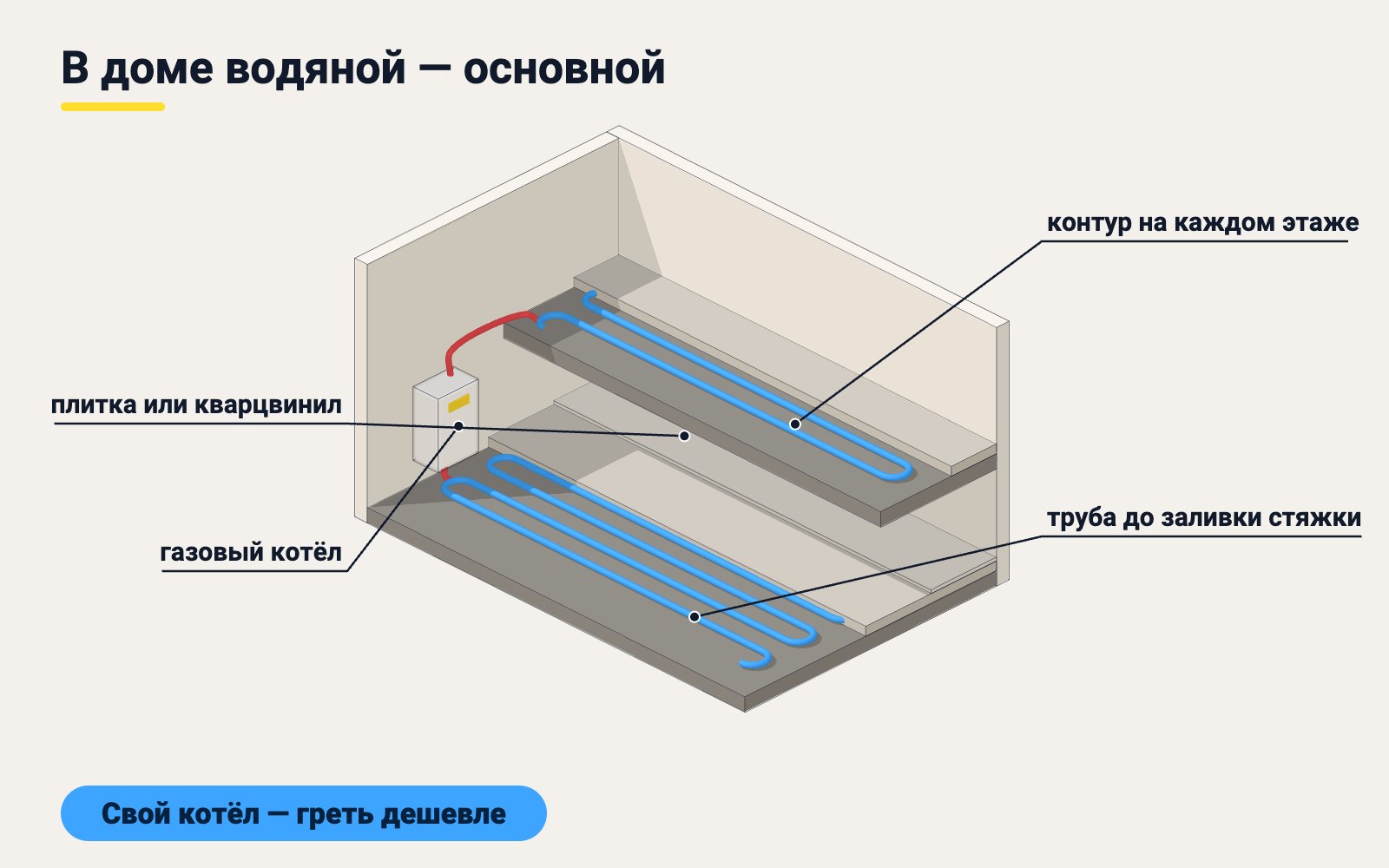
In a private house there are no legal restrictions, and the situation flips.
Hydronic circuit from your own boiler — especially gas — makes heating inexpensive. Over a house's area, installation pays for itself, which doesn't happen in an eight-square-meter bathroom.
Flooring limitations are the same: porcelain tile and luxury vinyl — yes, wood and laminate — not recommended.
Underfloor heating can be outdoors
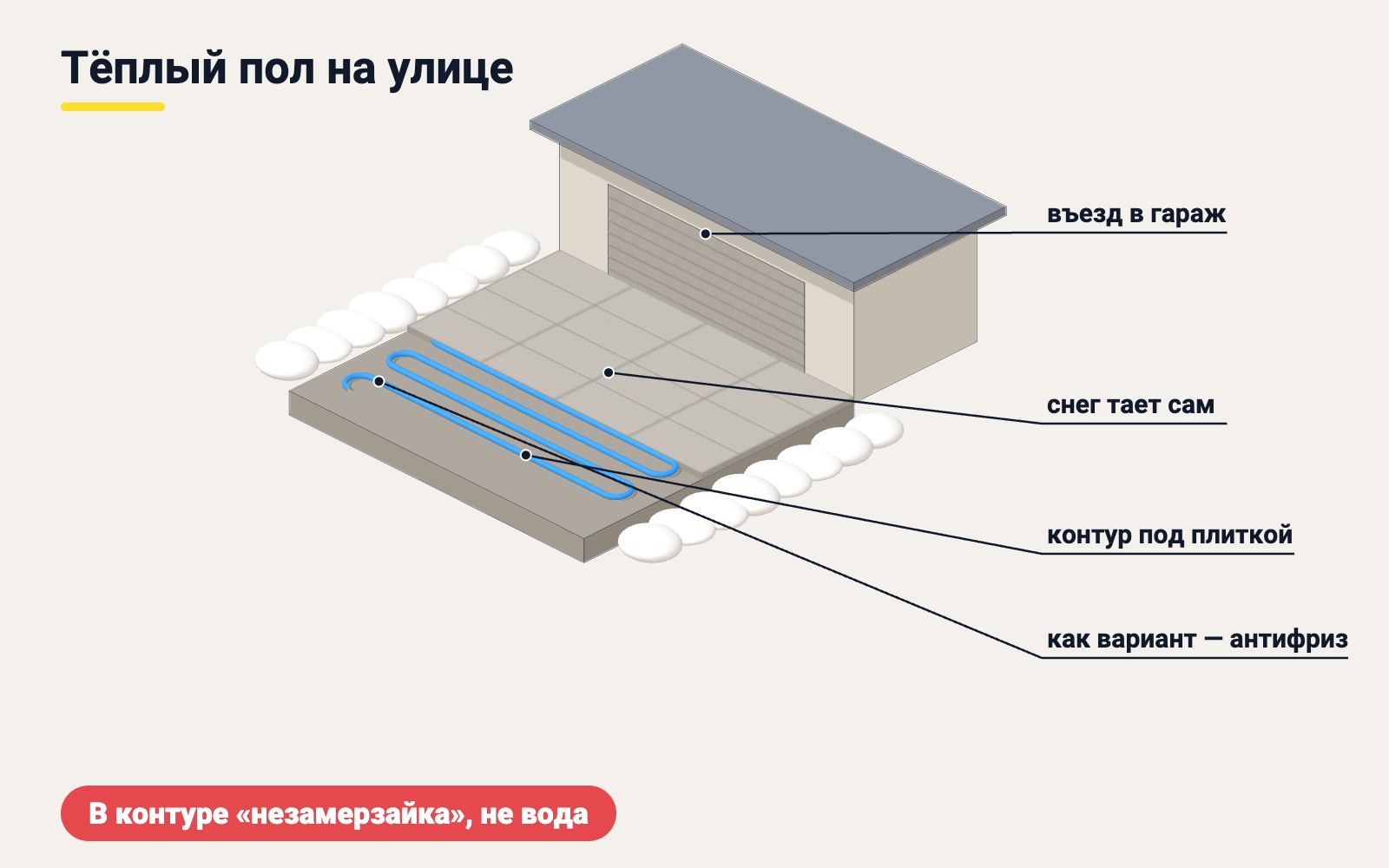
Almost no one writes about this, but in a private house it's useful.
Circuit is laid in front of garage entrance and under walkways, so you don't shovel snow or chip ice in winter. Runs from the same boiler.
But there's a critical point without which the system will fail the first winter: outdoor circuit uses antifreeze — non-freezing liquid. As an option — antifreeze. Water will freeze and burst the pipes.
This is when saving on heat carrier costs you the price of redoing the entire surface.
Short answer
Apartment — electric, almost no choice. Bathroom, entryway, kitchen in porcelain tile zone.
House with boiler — hydronic, throughout.
Either option — porcelain tile, ceramic tile, or luxury vinyl. Not wood.
Bathroom — also consider heated wall under towels.
Outdoors, entrance, walkways — hydronic circuit with antifreeze (as an option — antifreeze).
How this is resolved in the project
Floor type, installation zones, and compatibility with the chosen flooring are calculated at the design project stage — before the screed is poured and tiles are purchased. The album includes a floor plan and tile layout that the installer follows without guessing.
We visit the site, then work online.
Interior design project — from ₽29,900.
DAVart — your creative experts.